
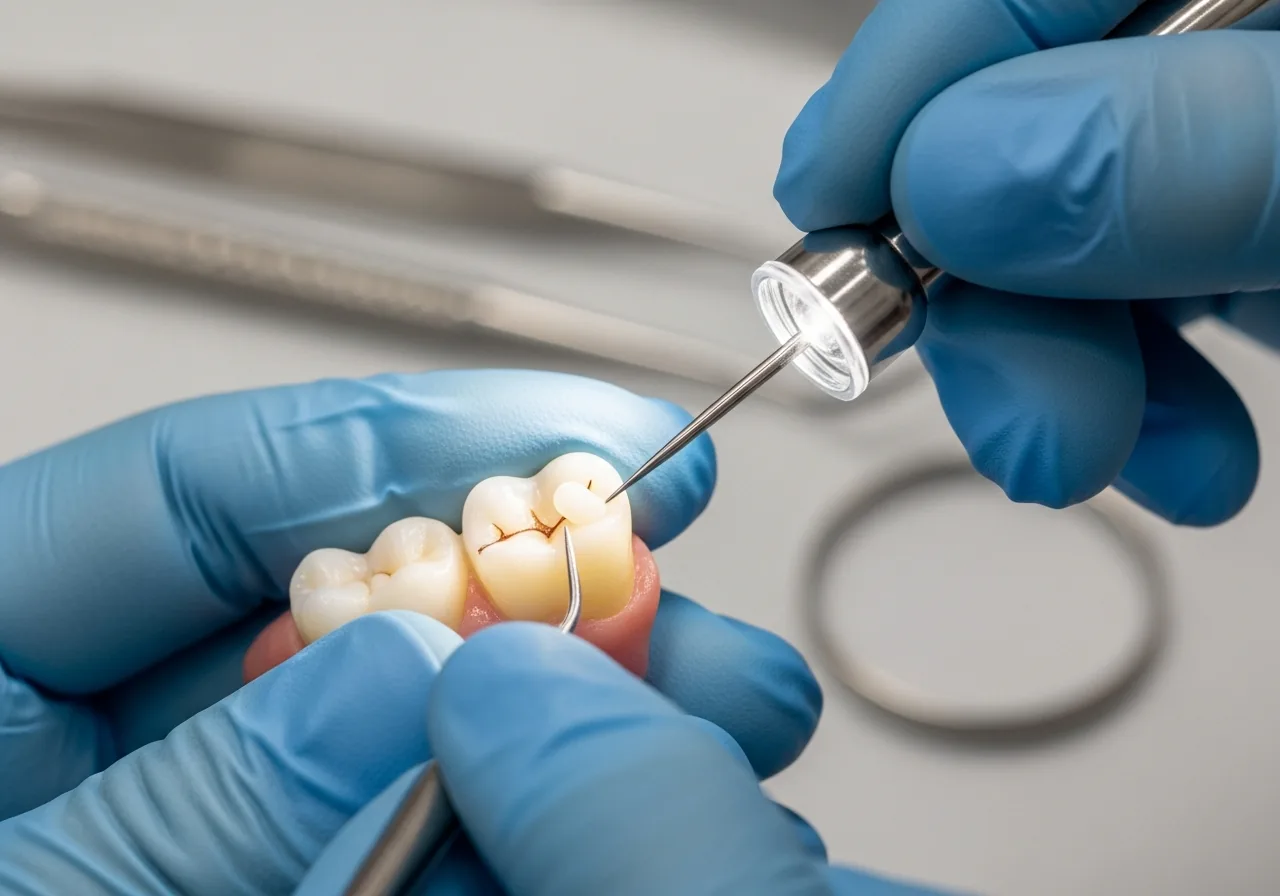
Composite fillings for baby teeth
If a baby tooth has decay, we remove the affected area and fill it again. In this way the tooth regains its original shape and function.
If a decayed tooth remains untreated, this can lead to greater damage and to early tooth loss – and with it to a lack of space for the permanent teeth that follow.
Where possible we use a high-quality composite filling. Because depending on your child's age, a filling in a baby tooth should last several more years until the change of teeth.
Composite filling
Tooth-coloured and bonded into the tooth. This makes it more stable and durable than a cement filling and it does not stand out visually.
The costs are partly covered by the statutory health insurance funds.
Cement filling (glass ionomer cement)
Light yellow in colour, softer than composite and therefore subject to greater wear – a solid basic restoration.
The costs are covered in full by the statutory health insurance funds.
The most important points at a glance
- The affected area is removed and the tooth regains its shape and function.
- Composite filling: tooth-coloured and bonded in, therefore more stable and durable – costs partly covered by the statutory health insurance fund.
- Cement filling (glass ionomer cement): light yellow and softer, a solid basic restoration – costs fully covered by the statutory health insurance fund.
- Depending on age, a filling in a baby tooth should last several more years until the change of teeth.
- If decay remains untreated, greater damage, early tooth loss and a lack of space for the permanent teeth are likely.